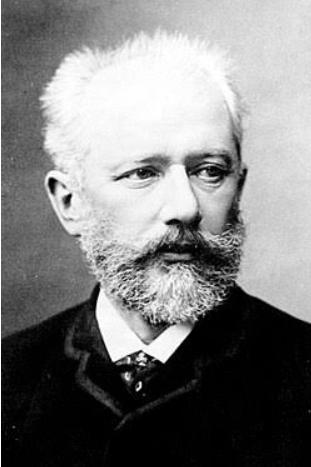
Every winter, ballet theatres fill with audiences ready to see one thing: The Nutcracker. The world-famous ballet is a family favorite, and a token of holiday cheer and the wintertime. But what many do not know is the story behind the ballet, and the life of Pyotr Ilyich Tchaikovsky, the composer behind it.
The Nutcracker is a world-renowned ballet that follows a young girl and a nutcracker through a dream land, full of sweets and magic. Perhaps one of the most famous ballets in the world, many recognize the musical pieces featured in the ballet, such as Dance of The Sugar Plum Fairy and Waltz of The Flowers.
The ballet was originally premiered in 1892 in St. Petersburg, Russia. With the help of choreographer Marius Petipa, Tchaikovsky prepared the music and the production came together as an adaptation of E.T.A. Hoffman’s fairy tale, the Nutcracker and the Mouse King. Tchaikovsky was commissioned to write the music score, and in only a year was able to compose the whole two hour long score.
The Nutcracker is only one of Tchaikovsky’s many compositions, and while it may be one of his most famous, he lived a lifetime full of music and composition.
Tchaikovsky was born in 1840, and studied at the Saint Petersburg Conservatory before going to America to study at Cambridge University. During this time he composed his first symphony, as well as his first opera. When he was in America, he became renowned as more than just a composer, and was considered a national treasure in Russia.
Only a year after publishing The Nutcracker, Tchaikovsky passed away in November 1893. After this, rumors of Tchaikovsky’s homosexuality spread throughout the classical music world like wildfire, and in the late 1890’s, many classical music fans veered away from Tchaikovsky’s music due to negative views on homosexuality. Especially in the English speaking world, given that Oscar Wilde’s 1895 trial was a highly scrutinized event perpetuating negative connotations on homosexuality.
To read more about Oscar Wilde’s case, click here.
This abnormalization of homosexuality in the western world caused Tchaikovsky’s formerly perfect reputation to become stained, and criticism from the general public caused his personal life to crumble as well. Even though Tchaikovsky’s beautiful works like the Nutcracker and 1812 Overture have been some of the most iconic pieces of classical music to be published, there exist many biographies, stories, and interpretations of his life and music through a biased lens.
Now in the 21st century, many writers and biographers have looked past biases, and more to his beautiful works and iconic compositions. Tchaikovsky was a talented, virtuosic writer, and there is no narrative that can change that.