The United Arab Emirates hides behind the Burj Khalifa, flashy hotels, renowned celebrity tours, and viral trends like Dubai Chocolate. Thus, it’s easy to associate Dubai with innovation and success. However, the reality is that the country as a whole has become a breeding ground for late-stage capitalism. The region caters to the elite, enforces mass-consumerism, and has recently been accused of funding a para-military group in Sudan in order to advance their own economy. It’s a little more than palm trees and sports cars.
Sudan has many pre-existing cleavages between its people. The divide between Muslim and Christian populations, regional economic disparities, and the political exclusion of southern sectors have cultivated tension for decades. In 2019, the long-standing authoritarian leader Omar Al-Bashir was overthrown and replaced by a civilian-led government. While in the delicate process of democratization in 2021, there was a military coup led by General Abdel Fattah Al-Burhan. Due to the revolt, the country’s prime minister at the time and all government officials were removed from office, ending democratic practices and establishing a military regime.
After nearly two years of military rule, the Sudanese Armed Forces (SAF) attempted to incorporate a paramilitary group known as the Rapid Support Forces (RSF) into the military, which would effectively diminish the militia’s autonomy. The RSF leader Mohamed Hamdan Dagalo, better known as Hemedti, strongly opposed this movement, and a vicious power struggle broke out between the two groups.
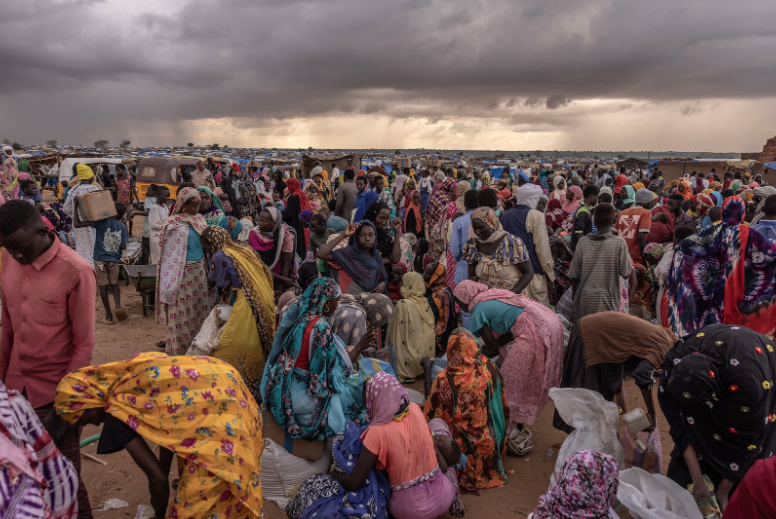
The conflict has only escalated, and the effects are detrimental to the state of Sudan. Infrastructure has collapsed, famine plagues millions, and reports of widespread rape and sexual slavery within the country are frequent. In a humanitarian study of satellite imagery, researchers from Yale University have identified innumerable amounts of dead bodies encircled by a pool of what is speculatively their own blood. People are dying, and the world is watching.
U.S. intelligence reports that the UAE has been funding the Rapid Support Forces throughout the duration of the war. Although the UAE denies any allegations, and the top diplomatic adviser boasts support of a ceasefire, other evidence indicates the country is more involved than they are letting on: transport planes from the UAE avoiding detection, munitions with Emirati serial numbers, and discussions of foreign support from RSF leaders.
Foreign expert’s opinion on the actions of the RSF in Sudan:
“They first encircle their target town or city, they weaken it by cutting off access to food, to medicine, to power supplies, the internet. Then when it’s weakened, they overwhelm the population with systematic arson, sexual violence, massacre and the destruction of vital infrastructure. This is a deliberate strategy to destroy and displace, and that’s why I feel the appropriate word is genocide.” (Sudan War, BBC News)
Sudan is naturally rich in gold and crude oil, most of which ends up being sold by the United Arab Emirates. By promoting political instability, the UAE continues to profit from Sudan’s resources, while simultaneously funding the massacre of its people. The greed and apathy of states such as the United Arab Emirates encourages a pattern of global desensitization to genocide. Palestine, Sudan, Syria, Haiti, the list of nations affected by a humanitarian crisis is extensive. But the international response is not. When does the growth of an economy begin to outweigh the value of life? Where does corporate greed end and humanity resurface?