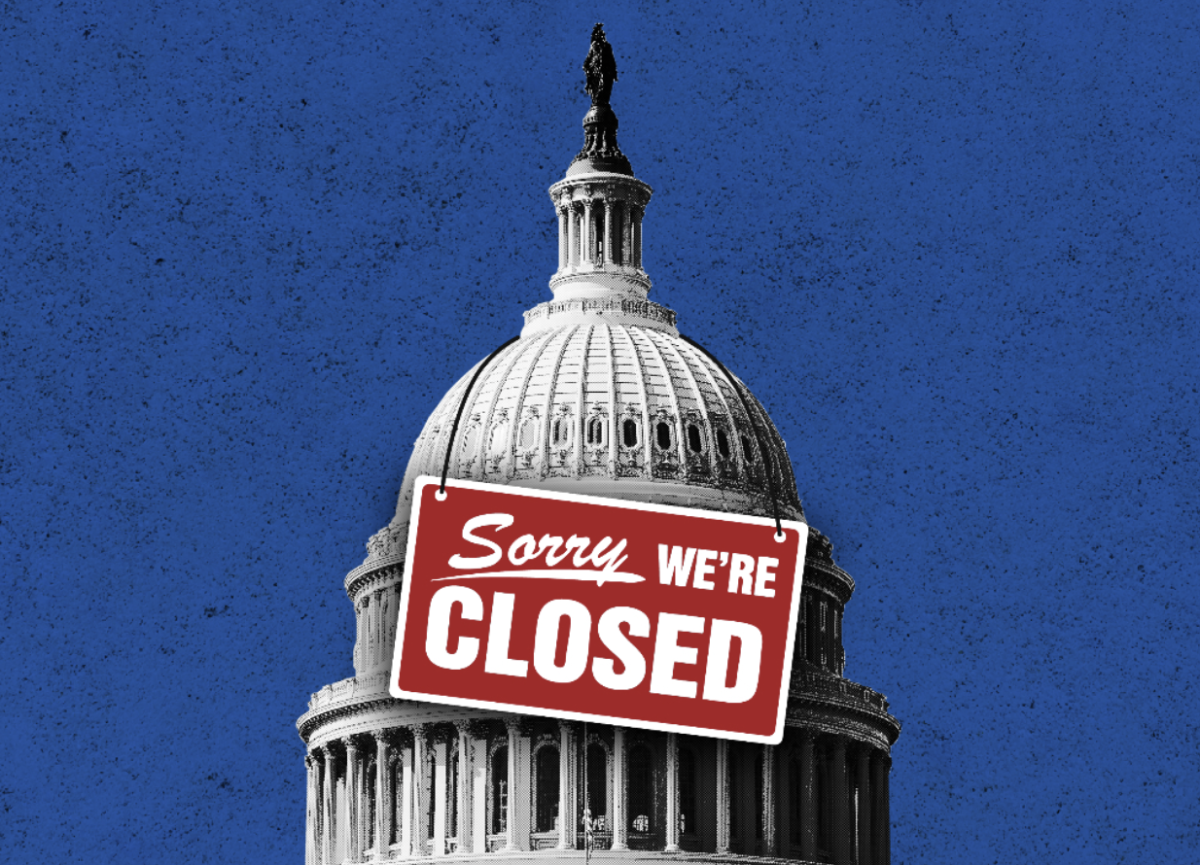
The government recently reopened on November 13th, ending the 43 day long shutdown. Becoming the longest shutdown in U.S. history.
Why did it happen?
A government shutdown occurs because Congress fails to pass a spending bill to fund federal government operations. Federal agencies are not allowed to spend money without an appropriation from Congress which causes the shutdown. During this non essential federal workers like civil case attorneys, national park staff and human resource workers are furloughed. Essential workers like law enforcement, power grid workers, and air traffic controllers work without pay. This shutdown happened because the Democrats and Republicans could not agree on extending healthcare subsidies which are assistance from the government to make healthcare more affordable.
During the Shutdown
While the shutdown was ongoing, more than just the federal workers were affected. Supplemental Nutrition Assistance Program (SNAP) benefits were cut off in the beginning of November. This program provides funds to low income families and individuals to buy food, meaning that for half of the month individuals were unable to feed themselves or their families. Adding to that, air traffic controllers were required to work without pay which caused them to apply to other jobs to make up for the money they weren’t getting. The Federal Aviation Administration (FAA) called for flight reductions at major airports because of the stress the shutdown put on air traffic controllers, causing flights to be cancelled and delayed at the last minute.
How did it end?
“The longest government shutdown in history has come to an end, with almost no one happy in the final result” Said PBS News.
The Democrats did not get the health care extensions they wanted, but decided to reopen the government because of the repercussions the shutdown was causing American citizens, as well as the fact that Republicans made it clear their tolerence for negotiation was limited. President Trump signed the bill that continues to fund the government until January 30th of next year, giving the government more time to finish other spending bills. With exceptions for SNAP benefits, WIC, benefits for women and children, the Department of Veterans Affairs, and Congress (which will be funded until the end of September of next year). Senate Majority Leader John Thune is holding a vote in December on a Democrat legislation about extending the subsidies. Which means the Democrats have a little less than a month to create a bill concerning Affordable Care Act subsidies that appeals to the Republicans.
What happens now?
Federal workers are back to being paid and employed, and flights are going back to normal. Unfortunately since the bill that was signed does not guarantee extended health care subsidies under the Affordable Care Act, it is likely health care costs will rise for individuals and families. This also means millions of Americans will be without health insurance. There is hope for the vote in December to pass a new budget that favors social
program subsidies, but nothing is guaranteed as of now.